 Mason Calculator
Wallpaper is experiencing a massive resurgence in 2026. From bold botanical prints to subtle textures, it is the most effective way to inject personality into a space. However, the biggest barrier to a successful project isn’t the glue or the ladder it’s the math.
There is nothing more frustrating than getting to the final corner of a room only to realize you are three feet short of a roll. Conversely, nobody wants $150 worth of high-end paper sitting in a closet because they over-ordered. This guide is designed to take the guesswork out of your next project.
Why “Simple Math” Often Fails with Wallpaper
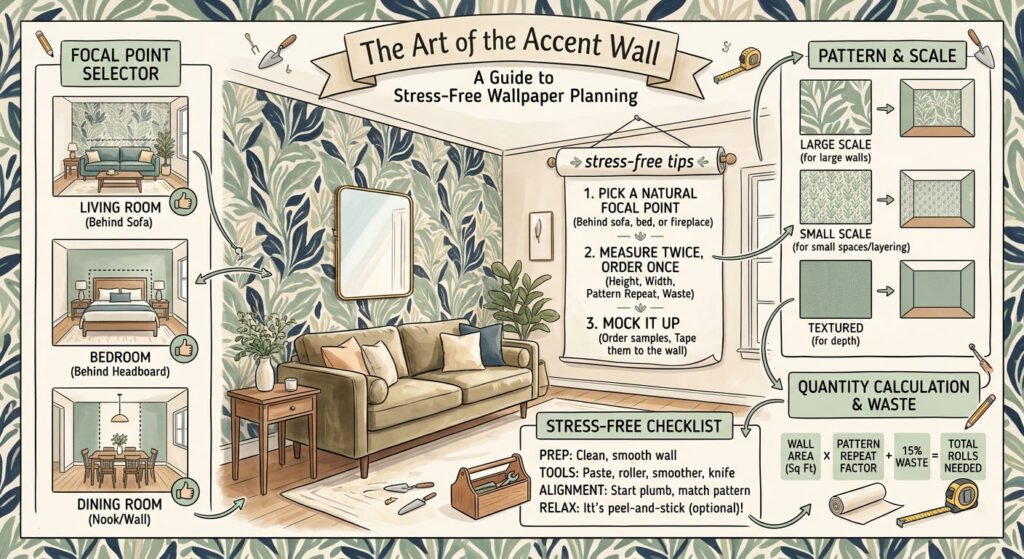
Unlike paint, wallpaper isn’t just about covering surface area. You are dealing with a repeating design that must align perfectly across every strip. This is called the Pattern Repeat.
If you choose a large, intricate design (like a floral mural), you will naturally waste more paper than if you chose a simple vertical stripe. This “waste” is necessary to ensure the flowers on strip A align with strip B. When you use our Wallpaper Calculator, we factor in these complexities so you don’t have to.
The Three Numbers You Must Know
Before you start, grab a metal tape measure (fabric ones stretch and lie) and find these three figures:
- The Perimeter: The total distance around the room (Wall A + Wall B + Wall C + Wall D).
- The Vertical Drop: The height from your baseboard to your ceiling.
- The Roll Width: Standard rolls are usually 53cm (21 inches), but “Double Rolls” and “Wide Width” papers are common.
Pro Tip: The “10% Safety Net”
Even a professional installer makes mistakes. A strip might tear, or you might accidentally cut a piece too short. Always add 10% to your final roll count. If you have an extra roll left over, keep it! It is your “insurance policy” in case a plumbing leak or a child’s crayon marks damage a section of the wall five years from now.
The Secret to Seamless Results
Before you apply the first drop, check your “Batch Numbers” or “Dye Lots” printed on the roll labels. Even the same color from the same brand can have a slight shade difference if it was printed on a different day. Ensuring all your rolls match is the difference between a professional finish and a wall that looks “patchy.”
Ready to start? Save yourself the headache of manual long-division. Head over to our Wallpaper Calculator, plug in your wall details, and get an instant, accurate roll count.