 Mason Calculator
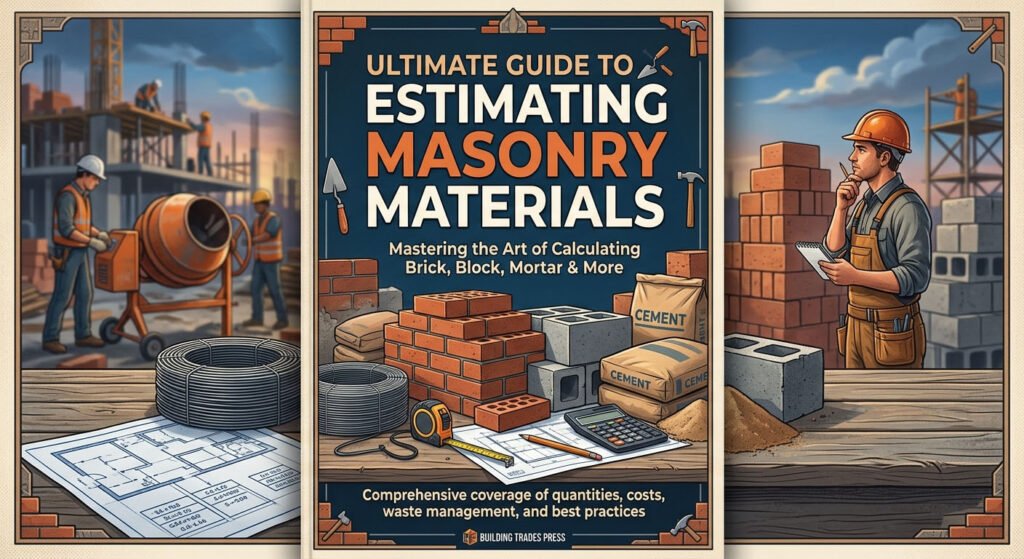
The Ultimate Guide to Estimating Masonry Materials
Introduction
Whether you are building a simple garden wall or a full-scale brick home, one question haunts every DIYer and contractor: “How much mortar do I actually need?”
Getting this wrong leads to two headaches. Either you run out of mix halfway through the job when the hardware store is closed, or you end up with five extra bags of cement hardening in your garage. In this guide, we will break down the exact science of mortar estimation and show you how to use a Mortar Calculator to get it right every single time.
Understanding the Mortar Mix Ratio
Before we talk about volume, we must talk about strength. Not all mortar is created equal. Depending on your project, you will likely use one of the following “Type” ratios:
- Type N (General Purpose): 1 part cement, 1 part lime, 6 parts sand. Perfect for residential walls and soft stone.
- Type S (Structural): 2 parts cement, 1 part lime, 9 parts sand. Used for load-bearing walls and foundations where high strength is required.
- Type M (High Strength): 3 parts cement, 1 part lime, 12 parts sand. Best for heavy loads or masonry in contact with the earth.
The Hidden Variable: The Joint Size
Most standard brickwork uses a 10mm (3/8 inch) joint. However, if you are doing decorative work or using uneven stone, that joint size might change. Even a 2mm difference in joint thickness can change your material requirements by 15-20%.
The Step-by-Step Calculation Formula
If you want to do the math by hand, here is the basic logic:
- Calculate Surface Area: Length of wall x Height of wall.
- Determine Brick Volume: Calculate how much space the bricks occupy.
- Calculate the “Void”: The space between the bricks is where your mortar goes.
- Factor in Waste: Always add 10% for “spillage” on the ground.
Pro Tip: Instead of doing complex math on a scrap piece of wood, use our Mortar Calculator. You simply enter your wall dimensions and brick size, and it does the heavy lifting for you.
Top 5 Tips for Mixing Perfect Mortar
- Consistency is Key: Your mortar should hang off a trowel held sideways. If it slides off, it’s too wet. If it’s crumbly, it’s too dry.
- Sift Your Sand: Large pebbles in your sand will ruin your 10mm joints.
- Mix in Small Batches: Mortar begins to set in 90 to 120 minutes. Don’t mix more than you can lay in an hour.
- Weather Matters: If it’s over 30°C (86°F), your mortar will dry too fast. Keep your bricks damp to prevent them from sucking the moisture out of the mix.
- Use the Right Tools: A clean mixer and a sharp pointed trowel make the job significantly easier.
Conclusion
Precision is the difference between a professional-looking wall and a DIY disaster. By understanding your ratios and using a reliable Mortar Calculator, you save time, money, and back-breaking labor.