 Mason Calculator
The Essential Guide for Professional Results
Painting a room is the fastest way to transform your home. But standing in the paint aisle of a hardware store trying to guess if you need two cans or four is a recipe for frustration.
Too little paint means a mid-day trip back to the store (and the risk of a “color mismatch” from a different batch). Too much paint means $80 sitting on a shelf for a decade. This guide explains how to calculate paint like a pro using our Paint Calculator.
The “One Liter” Rule of Thumb
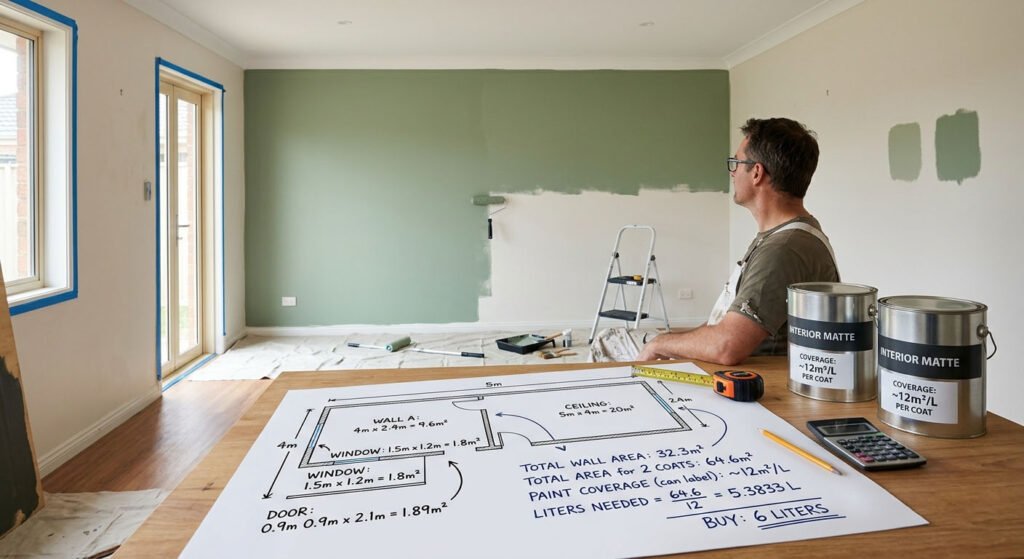
Generally, one liter of quality paint covers approximately 10 to 12 square meters of wall. However, this is just a starting point.
Factors That Change Everything
Several variables can double the amount of paint you need:
- The Surface Texture: A rough, “popcorn” or brick wall has more surface area than a smooth drywall. It will “soak up” more paint.
- Color Change: If you are painting white over a dark navy blue wall, you will definitely need a primer and at least two coats of the new color.
- Porosity: New, unpainted drywall acts like a sponge. Without a dedicated primer, you will use 30% more top-coat paint than necessary.
How to Measure Your Room Correctly
To get an accurate number for our Paint Calculator, you need three measurements:
- Total Wall Length: Measure all walls from corner to corner and add them up.
- Ceiling Height: Measure from the floor to the ceiling.
- Subtract Openings: Measure the width and height of doors and windows. You aren’t painting them, so subtract that area from your total.
Why Two Coats is Always Better Than One
Many “One-Coat” paints exist, but professional painters almost always apply two. Why?
- Durability: Two thin coats create a harder, more scrubbable surface than one thick coat.
- Uniformity: It eliminates “holidays” (the tiny spots you missed the first time).
- True Color: The pigment in the paint reaches its intended depth and richness only after the second layer.
Don’t Forget the Trim and Ceiling
People often calculate the walls but forget the “extras.”
- Ceilings: Usually require a different type of flat paint.
- Baseboards and Doors: Often require a semi-gloss or gloss finish for easy cleaning.
- The Formula: Surface Area / Coverage Rate x Number of Coats = Total Paint Needed.
Summary: Save Time with Technology
Calculations are boring, but painting shouldn’t be. To ensure you have the exact amount of paint for your next renovation, head over to our Paint Calculator. Simply plug in your numbers, and we will tell you exactly how many liters to buy.